


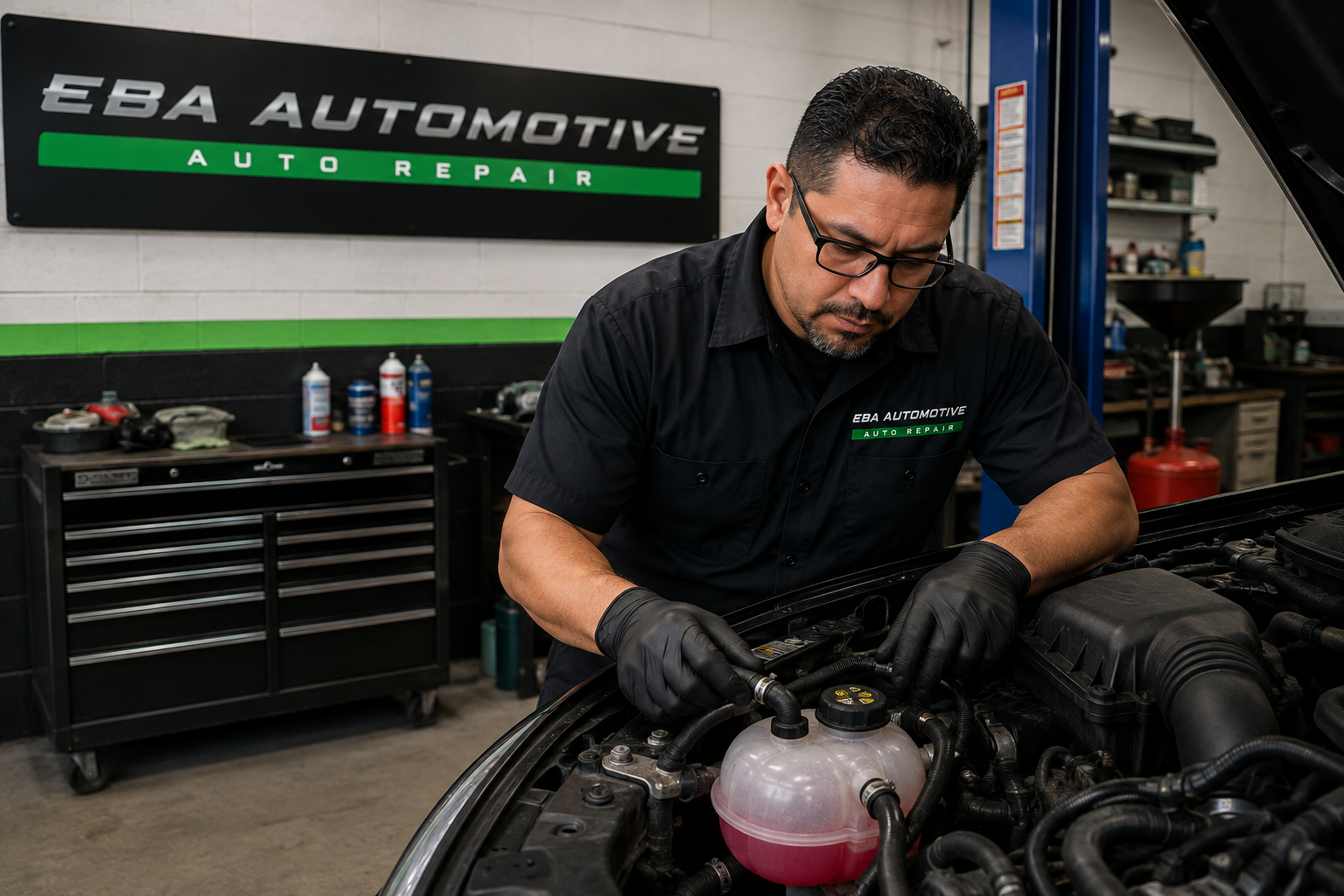
Why cooling systems fail after the heat, not during it
Look at what a cooling system is actually made of. Rubber hoses. Plastic radiator end tanks and coolant reservoirs. Rubber and composite gaskets and seals. A water pump with a bearing and a seal in it. Very little of that system is the metal people picture.
Sustained heat ages rubber and plastic. Rubber loses plasticizer and hardens. Plastic becomes brittle. Neither happens in a moment, and neither requires the car to have overheated even once. Four months of running at operating temperature in 100 degree ambient air is simply four months of accelerated ageing.
Then the weather changes, and here is the mechanism that catches people out. Materials contract as they cool. A hose that has hardened over the summer no longer flexes the way it did, so when everything shrinks slightly in the first cool weeks, a hardened hose can fail to seal against its fitting. A brittle plastic end tank can crack. A seal that had gone stiff no longer follows the surface it is supposed to seal against.
So the damage is done in July and the symptom appears in October. That is not a coincidence, and it is why we would rather look at your cooling system now than after it has told you itself.
Allen traffic adds to it. Stop and go on Highway 121 or Central means the system is working hardest exactly when airflow through the radiator is lowest, which is the least favorable combination there is.
The six parts that take the damage
What we look at, and what each one does when it has had enough.
Hoses
The most common failure. A healthy hose is firm but pliable. One that has hardened, gone spongy, or shows cracking near the clamps is on borrowed time.
Water pump
A bearing and a seal spinning constantly at temperature. A weep from the pump's drain hole or a whine that changes with engine speed are the two tells.
Thermostat
Stuck closed causes overheating. Stuck open means the engine never fully warms, which hurts fuel economy and your heater. Two failures, opposite symptoms.
Radiator
Many radiators have plastic end tanks crimped to an aluminum core. Heat cycling is exactly what cracks those seams, and it is a common source of a slow leak.
Radiator cap
The cheapest part here and an easy one to overlook. It holds system pressure, and pressure raises coolant's boiling point. A weak cap lowers your margin before boil-over.
Cooling fan
The part doing the work in traffic. A fan or fan clutch that is not engaging properly shows up as a temperature gauge that climbs at a stop and settles once you move.
That last symptom is worth knowing on its own. If your temperature rises in traffic and drops once you get moving, that points at airflow rather than coolant, and it is a different repair from the one most people assume. Our post on why your engine temperature warning light comes on covers what to do in the moment.
Coolant is not just antifreeze
The name is the problem. Calling it antifreeze suggests its only job is preventing a freeze, which in Allen sounds like something you can ignore.
Coolant does three things. It raises the boiling point and lowers the freezing point, so the system can run above 212 degrees without boiling. It transfers heat from the engine to the radiator, which is the whole point. And it carries corrosion inhibitors that protect the metals inside your engine, radiator and heater core from each other.
That third job is the one that fails silently. Those inhibitors deplete over time, and once they are gone the coolant stops protecting and starts allowing corrosion. The fluid still looks like coolant. It is no longer doing coolant's most important job.
Two things worth checking. Coolant should be the color it started as and should be clear rather than cloudy. Rusty, muddy or oily-looking coolant is a finding. And coolant types are not interchangeable, so topping up with whatever is on the shelf can cause problems rather than solve them. Your owner's manual specifies what your engine takes.
If your level has dropped, that matters more than the amount. Coolant does not evaporate out of a sealed system. A low level means a leak, and finding it is the job. Our maintenance scheduling guide covers where fluid service fits into the rest of the year.
Spots on the driveway?
Bring it in and we will find where it is coming from. Coolant leaks get cheaper the earlier you catch them.
Can't wait around? Use the key drop and we will call you with what we find.
This is not your air conditioning
Worth separating, because the two get confused constantly and they are genuinely different systems.
Your air conditioning cools the cabin. It uses refrigerant, a compressor and a condenser, and when it fails you are uncomfortable. Our guide on why your car AC blows warm in Allen covers that side.
Your cooling system cools the engine. It uses coolant, a water pump and a radiator, and when it fails you can destroy the engine.
They share almost nothing except a position at the front of the car and a summer workload. Your AC can be ice cold while your cooling system is one hose away from stranding you, and the reverse is equally true.
One place they do connect: the AC condenser sits in front of the radiator, so debris packed between them restricts airflow to both. That is one reason a cooling problem sometimes appears alongside an AC complaint.
What to check before fall
- Coolant level and condition. Engine cold. Level between the marks, fluid clear and the right color, no rust or oil in it.
- Hose condition. Firm with slight give. Look at the ends near the clamps, where cracking starts.
- The ground where you park. Coolant is usually green, orange, pink or yellow depending on type, and it is slightly sticky.
- Your temperature gauge behaviour. It should climb to its normal position and stay there. Anything that moves around in traffic is telling you something.
- Your heater. This one is seasonal and underrated. Your heater runs on engine coolant, so weak heat in November is often a cooling system symptom rather than a heater fault.
That last point is why September is the right month for this. A cooling system check now covers both the summer damage behind you and the heater you are about to start using.
Frequently asked questions
Why did my cooling system fail after summer ended?
Because most of the system is rubber, plastic and gaskets, and sustained heat ages those materials whether or not the vehicle ever overheated. Hoses harden and plastic becomes brittle over months at temperature, and when everything contracts slightly as the weather cools, a hardened hose or brittle end tank can start to leak.
Is coolant the same as antifreeze?
They are the same fluid, but the name undersells it. Coolant raises the boiling point as well as lowering the freezing point, transfers heat from the engine to the radiator, and carries corrosion inhibitors that protect the metals inside the system. Those inhibitors deplete over time, which is why coolant has a service interval even in a warm climate.
My temperature gauge rises in traffic and drops when I move. What is that?
That pattern usually points at airflow rather than coolant. At a standstill the cooling fan is doing all the work, and a fan or fan clutch that is not engaging properly lets temperature climb until vehicle speed restores airflow. It is a different repair from a coolant or water pump problem.
Can I just top up the coolant myself?
You can check the level with the engine cold, and it is worth doing. Two cautions: never open a radiator cap on a warm engine, and coolant types are not interchangeable, so use what your owner's manual specifies. Also remember coolant does not evaporate, so a low level means a leak worth finding rather than repeatedly topping up.
Is the cooling system the same as the air conditioning?
No. Air conditioning cools the cabin using refrigerant and a compressor. The cooling system cools the engine using coolant, a water pump and a radiator. They are separate systems, and one can work perfectly while the other is failing.
Why is my heater weak in the winter?
Often because of the cooling system rather than the heater. Cabin heat comes from engine coolant flowing through a heater core, so low coolant, a thermostat stuck open, or a restricted heater core all produce weak heat. It is one reason a cooling system check before fall is worth doing.
Related reads
Engine temperature warning light
What to do the moment the gauge climbs, and what the light is actually telling you.
Read the guideWhy your AC is blowing warm
The other system at the front of your car, and why a recharge is often not the fix.
Read the AC guideHow often to schedule maintenance
Where cooling system service fits alongside everything else through the year.
Read the schedule