


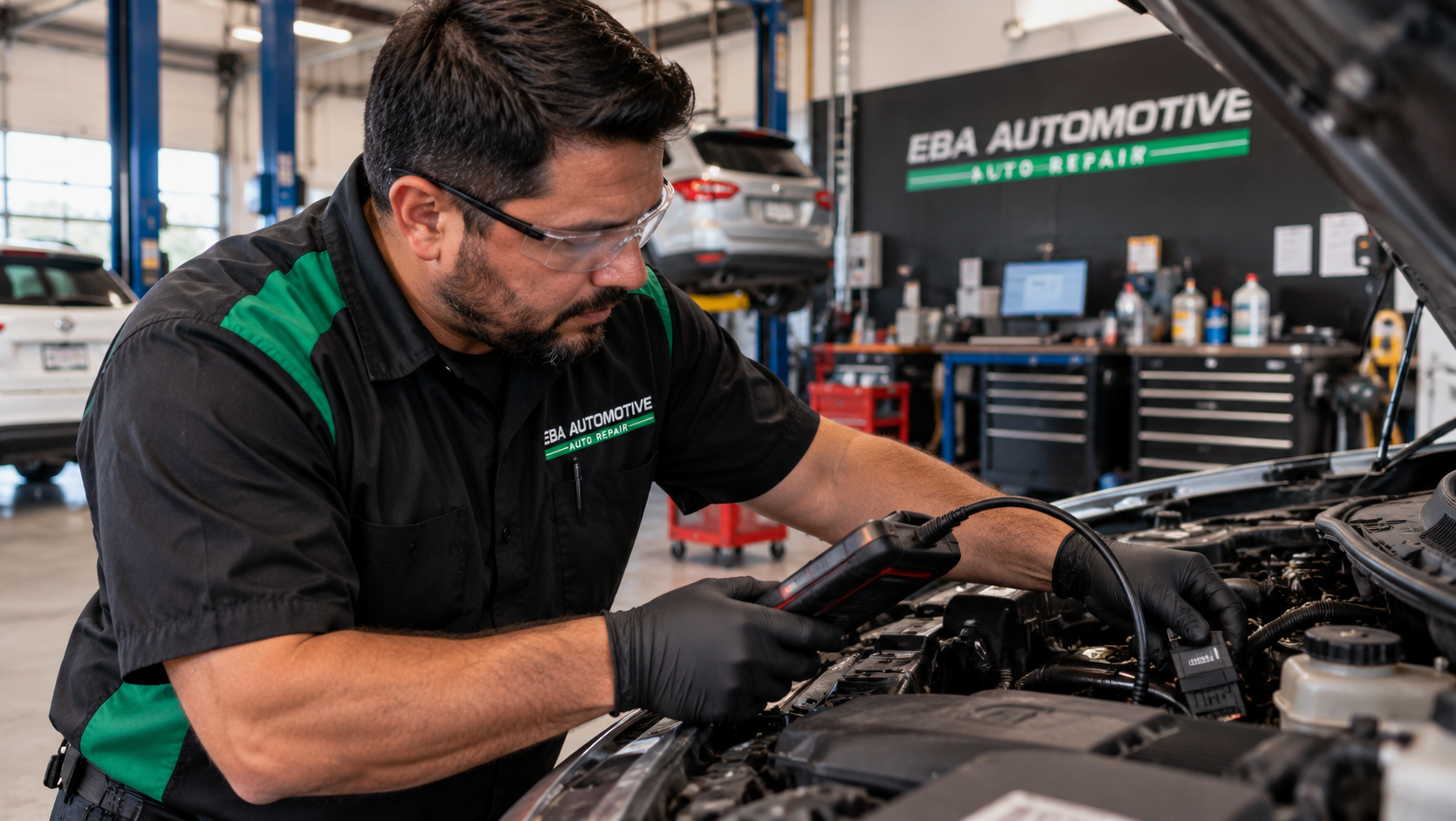
What changed with Texas vehicle inspections in 2025
For years, Texas drivers brought their vehicle in once a year for a safety inspection. A licensed inspector checked brakes, tires, lights, steering, wipers, and other safety items. Pass and you got a sticker. Fail and you had to fix the problem before registering.
That program ended on January 1, 2025. House Bill 3297, signed into law by Governor Greg Abbott in 2023, eliminated the annual safety inspection for non-commercial vehicles, per the Texas Department of Public Safety. The change applies whether you own a Toyota Camry, a Ford F-150, or a brand-new EV.
Safety inspection
- No more annual brake, light, tire, or steering check
- No more pass/fail sticker on your windshield
- Replaced by a $7.50 registration fee under HB 3297
- Commercial vehicles still need safety inspections
Emissions test
- Annual OBD-II test for gas vehicles 2 to 24 years old
- Required in 17 Texas counties, including Collin
- Must pass before you can renew your registration
- Electric-only vehicles remain exempt
New vehicles purchased in Texas pay $16.75 upfront to cover the first two years of the replacement fee. After that, the standard $7.50 annual fee applies at registration renewal.
What Allen drivers still need: the annual emissions test
Collin County is one of 17 Texas counties that still require an annual emissions inspection. The rule is separate from the old safety inspection program and is run by the Texas Commission on Environmental Quality (TCEQ) together with DPS, to meet federal air-quality standards in major metro areas. For Allen drivers, that means:
- Gasoline vehicles between 2 and 24 years old need an annual emissions test.
- The test uses your vehicle's OBD-II port, the same diagnostic port a mechanic uses to read trouble codes.
- Without a passing test on file, your registration can't be renewed.
The Texas emissions counties
If your vehicle is registered in any of these counties, you need an annual emissions test:
- Brazoria
- Collin (Allen)
- Dallas
- Denton
- Ellis
- El Paso
- Fort Bend
- Galveston
- Harris
- Johnson
- Kaufman
- Montgomery
- Parker
- Rockwall
- Tarrant
- Travis
- Williamson
- Bexar (from Nov 1, 2026)
Bexar County (San Antonio area) joins the emissions-required list on November 1, 2026, per the Texas Department of Public Safety.
What happens during a Texas emissions test?
The test itself is quick. Here's how it works:
- Check in. A certified Texas emissions station scans your VIN and odometer to confirm your vehicle's eligibility.
- Plug in. The technician connects to your OBD-II port and reads emissions data directly from your engine computer.
- Readiness check. Your car's computer monitors the catalytic converter, EVAP system, oxygen sensors, EGR, and more. The test confirms all monitors are set and no fault codes are present.
- Result filed. Pass or fail, the result goes electronically to DPS. No paper sticker needed, and the whole thing typically takes under 30 minutes.
No tailpipe sniffer, no rolling dynamometer, just an electronic conversation with your car's computer.
Why cars fail the Texas emissions test
Most emissions failures trace back to one of six issues, and every one is something a mechanic can fix.
Check engine light is on
A lit check engine light almost always triggers an automatic fail. Texas requires no emissions-related fault codes before passing.
Faulty oxygen sensor
O2 sensors tell your engine how to mix fuel and air. A bad one throws off the mixture and lights up the check engine light.
Failing catalytic converter
The converter scrubs harmful gases before they leave the tailpipe. A worn or clogged one is a common, and pricier, fail cause.
EVAP system leak
The EVAP system traps fuel vapor from your tank. The most common cause is a loose or damaged gas cap, sometimes a fifteen-dollar fix.
Recent battery disconnect
After a jump start, new battery, or repair, readiness monitors may not have finished their self-checks. Drive normally for a few cycles before testing.
Engine misfire codes
A misfire sends unburned fuel into the exhaust and damages the converter over time. It usually shows up as a P0300-series code.
If any of these sound familiar, fix the issue before your registration deadline, not after. A lit check engine light a week before your registration is due is a problem worth solving now.
What if my car fails the emissions test?
Failing isn't a dead end. Here's how it works:
- Get the report. The station issues a Vehicle Inspection Report showing which test failed and why.
- Repair the cause. A shop that handles both diagnosis and emissions testing saves you the round trip. EBA Automotive does both.
- Come back for a re-test. Most stations offer a free re-test within 15 days of the original. Confirm the policy with your shop.
Driving on expired registration can get you a citation from Allen PD or any Texas officer, and the fine often costs more than the repair would have. The faster you address the cause, the simpler your renewal becomes.
Check engine light on? Recent fail?
Don't wait until your registration expires. We diagnose, repair, and get your vehicle emissions-ready in one shop. No second trip.
5843 Curtis Dr, Suite 500, Allen • Serving Allen, Plano, McKinney, Frisco, and Fairview
How much does a Texas vehicle inspection cost in 2026?
Here's the honest breakdown:
No surprise add-ons, no hidden charges. For current emissions test fees in Collin County, see the TCEQ vehicle emissions program page.
Why Allen drivers trust EBA Automotive for emissions service
EBA Automotive serves Allen, Plano, McKinney, Frisco, and the wider Collin County corridor. The idea is simple: get the work done right the first time, explain everything before you commit, and treat every car like our own.
Our ASE-certified technicians are trained on emissions and diagnostics, and we diagnose, repair, and test in the same visit, so there's no second appointment. We work on domestic, Asian, and select European vehicles, from a 2008 Tahoe to a 2024 Tucson Hybrid. You get a clear estimate before any work, with no upsell pressure, and our bilingual team is happy to help in English or Spanish. You'll find us at 5843 Curtis Dr, Suite 500, just off Curtis Road.
Frequently asked questions
- Do I still need a state inspection in Texas in 2026?
- The annual safety inspection ended January 1, 2025, for non-commercial vehicles. But if you're registered in Collin County or one of the other 16 Texas emissions counties, you still need an annual emissions test before you can renew your registration.
- What counties in Texas require emissions tests?
- Seventeen counties currently require annual emissions testing: Brazoria, Collin, Dallas, Denton, Ellis, El Paso, Fort Bend, Galveston, Harris, Johnson, Kaufman, Montgomery, Parker, Rockwall, Tarrant, Travis, and Williamson. Bexar County joins the list on November 1, 2026.
- Will my car fail emissions with a check engine light on?
- Almost always, yes. A lit check engine light is one of the most common reasons a vehicle fails the Texas emissions test. The underlying issue is usually fixable, and once repaired, your car can re-test.
- How often is a Texas emissions test required?
- Once a year, before your registration renewal. The result is filed electronically with DPS under the state's "Two Steps, One Sticker" program, so no paper sticker is needed.
- Are electric vehicles required to do emissions tests in Texas?
- No. Electric-only vehicles are exempt from emissions inspections in every Texas county, regardless of age or where you live.
- I just moved to Texas. What inspection do I need?
- If you're registering a vehicle in Texas for the first time and live in an emissions county, you'll need a passing emissions test before completing your registration. The test comes first, then registration.
- How long does an emissions test take?
- For most vehicles, under 30 minutes from check-in to result. Older vehicles or those with unset readiness monitors may take longer.
- What is the $7.50 inspection program replacement fee?
- It's a flat fee added to annual vehicle registration in Texas, introduced when the safety inspection program ended in 2025. New vehicle owners pay $16.75 upfront to cover the first two years.
More from EBA Automotive
Brake Repair in Summer Heat
What the squeal, the soft pedal, and brake fade really mean in Allen's summer traffic.
Read the guideTexas DPS Inspection Changes
The official announcement on the end of the safety inspection program.
Visit DPSGet your car emissions-ready.
Most emissions tests take under 30 minutes. If repairs are needed, our ASE-certified technicians can handle them in the same visit.
5843 Curtis Dr, Suite 500, Allen, TX 75002 • Mon to Fri, 7am to 6pm • Se habla español